Render, stone, and surroundings handed over clean
Clean render without eroded plaster surfaces
Wall coatings and painted render retain their factory texture without scouring or blast marks. Travertine and natural stone borders keep their protective seal intact. The entire facade brightens without damaging delicate architectural details.
Walls free from recurring spore growth
Eliminating biological growth down to the roots keeps damp north walls clean through wet winters. Surfaces resist dark algae banding and green staining far longer than after pressure washing. Walls stay bright through seasonal shifts.
Surrounding gardens and pool water preserved
Lawn turf, mature palms, and decorative flowerbeds show zero chemical scorch or foliage damage. Glazing and swimming pools remain balanced and clear of drifting treatment chemicals. The entire villa grounds stay completely usable.
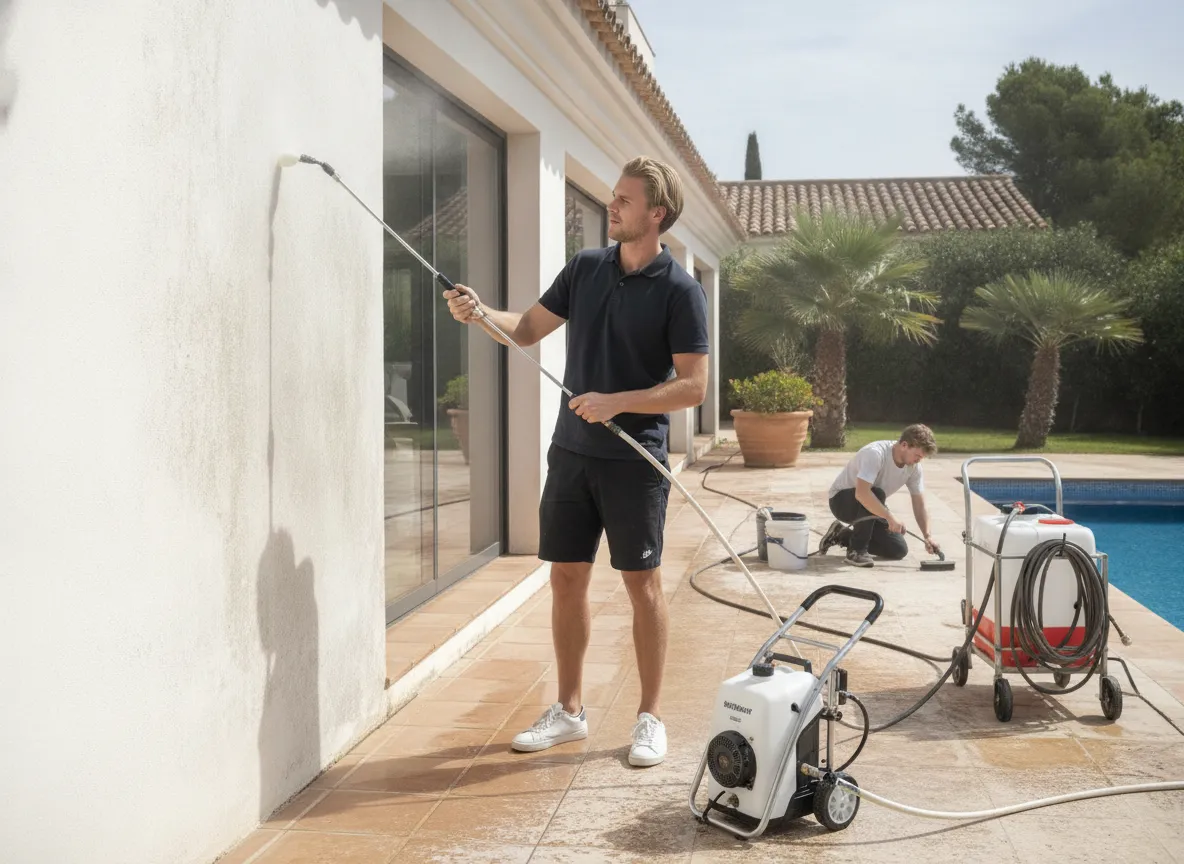 Softwashing in the Costa del Sol
Saharan calima dust and salt mist settle into painted render and porous stone across the coast. High-pressure lances strip painted coatings, blast out expansion joints, and etch porous travertine. This leaves permanent scars on decorative surfaces.
North-facing walls in shaded valleys like Benahavís remain damp all winter. Untreated mould spores dig into micro-fissures behind acrylic render. This eventually causes blown plaster, water ingress, and expensive wall rebuilding.
Runoff from improper chemicals scorches surrounding gardens. Foliage like bougainvillea, mature palms, and lawn turf dies back rapidly. Overspray also stains glass balustrades with mineral streaks that require specialist polishing.
Softwashing completed in seven distinct steps
Surrounding garden foliage is thoroughly pre-soaked — Clean water saturates the soil and leaves around the perimeter. This shields root systems before work begins. Bougainvillea, hedges, and beds cannot absorb cleaning runoff once fully hydrated. The surrounding earth remains protected throughout the entire treatment.
Exterior electrical fixtures and fittings are masked — Waterproof covers seal outdoor sockets, garden lighting, and raw metal fittings. Protecting hardware prevents water penetration, short circuits, and corrosion from chemical mist.
Low-pressure biocide solution is evenly applied — A tailored mix coats the affected render and natural stone without mechanical blasting. The solution targets organic spores, lichen colonies, and ingrained red dust directly at surface level.
Applied solution dwells until spores neutralise — The biocide breaks down root systems, algae filaments, and atmospheric grease. Dwell times are monitored carefully. Premature rinsing leaves active spores behind, allowing biological growth to return within months.
Surfaces are thoroughly rinsed under low pressure — High-volume water flushes dead biological matter and dissolved calima dust off the facade. Pressure stays low to keep render, lime plaster, and stone joints intact.
Adjacent beds and perimeter drains are flushed — Plentiful fresh water washes down paths, drainage channels, and nearby soil borders. Diluting any lingering residue prevents chemical buildup around sensitive garden roots.
Glass panels and balustrades are washed — Pure water rinses window panes and glass railings. This clears away any drifting spray or mineral spots. The villa exterior is handed back completely clear, dry, and clean.
We cover the Costa del Sol
Detached villas and substantial coastal grounds are maintained across the entire region on a scheduled cycle.
Your questions, answered
Why is softwashing preferred over pressure washing on villas? +
High pressure easily gouges painted plaster, blows lime render off masonry, and erodes natural stone surfaces. Softwashing relies on low-pressure chemical neutralisation instead of physical impact. Mould, red dust, and lichen break down chemically while the wall beneath stays completely intact.
How long will the exterior walls remain clean? +
The biocide kills spores outright instead of shaving off surface matter, so growth takes considerably longer to re-establish than after pressure washing. How long depends on shade and moisture exposure. The approach is a deep reset once or twice a year, then light maintenance washes so growth never takes hold again.
Will the treatment chemicals harm garden plants or pets? +
Garden beds and lawns are saturated with fresh water before and after application to dilute any falling runoff. Pets should stay indoors during spraying and until the treated surfaces are dry.
Can softwashing remove red saharan calima dust stains? +
Specialised wash formulas break the bond between the fine red clay dust and textured paint. Pressure washing forces these microscopic particles deeper into porous render. Chemical lifting floats the dust away gently during the low-pressure rinse.
Is the treatment effective on natural marble and sandstone terraces? +
Formulations are adjusted specifically for porous stone like sandstone, travertine, and marble. Acidic mixtures are avoided on limestone to prevent surface etching. Balanced biocides kill deep algae without dulling natural stone polishes.
Do windows need to be cleaned after wall softwashing? +
Surrounding windows and glass balustrades are always washed down as the final step. Runoff can dry into milky water marks, so professional window cleaning completes the process to leave glazing clear.
What happens if patches of algae or staining remain after drying? +
Surfaces are inspected once completely dry. Lingering shadows or missed spots are assessed on site, and any remaining algae patches are given a follow-up wash.